Martial Arts Student Retention: Proven Strategies to Keep Your Dojo Thriving in 2026

Martial arts student retention is the practice of helping students keep training consistently over time. For many school owners, the hard part is not only making classes better. It is noticing the small changes that may come before a student quietly stops showing up.
Students rarely disappear for one single reason. Attendance may become less consistent. A student may stall between ranks. A parent may stop asking questions after class. An adult student may seem less engaged during drills. Each signal can look minor on its own, but together they may point to a student who is losing momentum.
The goal is not to pressure every student into staying forever. A more practical goal is to build a repeatable way to notice risk earlier, follow up with care, and make it easier for students to reconnect before training becomes an afterthought.
Why Student Retention Starts With Early Signals
A strong retention process often begins before a student says they are thinking about quitting. By the time a student cancels, the school may have missed several earlier chances to check in.
Common early signals can include:
- Attendance dropping from consistent to occasional
- Longer gaps between classes
- Missed classes after a belt test, competition, injury, or trial period
- Little visible progress toward the next rank
- Repeated parent questions about motivation or schedule fit
- Less participation during partner work, sparring, or group drills
- A student who used to engage with instructors becoming quiet or detached
None of these signs guarantees that a student is about to leave. A missed week may come from travel, school events, work, family obligations, or illness. The value is in seeing the pattern soon enough to respond thoughtfully.
Watch Attendance Patterns Before They Become Absences
Attendance is one of the clearest retention signals because it is visible before most students voice a concern. A student who usually trains twice a week and then appears once every other week may be drifting, even if they are still technically enrolled.
Schools can review attendance with a few simple questions:
- Which students have missed more classes than usual?
- Which students have not attended in the last two weeks?
- Which beginners have attended only once after signing up?
- Which students recently changed class times or age groups?
- Which students stopped attending after a rank promotion or event?
This does not have to become complicated. Even a weekly review of recent attendance can help owners and instructors see who may deserve a friendly check in.
The follow up can stay low pressure. A short message such as "We missed seeing you in class this week. Hope everything is okay" may be enough to reopen the conversation. If the student is busy, the school can help them find a class time that fits. If they are discouraged, the instructor can invite them back with a specific next step.

Look For Stalled Rank Progress
Rank progression is another useful retention signal, especially in schools where belts, stripes, or skill levels help students understand their growth. When students feel stuck for too long, they may start to question whether training is still worth the time.
Stalled progress can show up in several ways:
- A student has attended regularly but has not been reviewed for the next rank
- A student misses the classes where testing material is practiced
- A beginner does not understand what they are working toward
- A student avoids certain techniques because they feel behind
- A child loses motivation because parents cannot see clear progress
The fix is not always to promote faster. In many cases, the better response is clarity. Students may benefit from knowing what they are close to mastering, what still needs practice, and when the next review might happen.
A simple progress note can help instructors avoid vague feedback. Instead of saying "keep working," the instructor can record that the student is improving on footwork but still needs practice with breakfalls, guard retention, forms, or combinations, depending on the art.
Use Student Notes To Add Context
Attendance and rank history are more useful when they are paired with instructor notes. A student may miss class because of a school play, a knee injury, a new job schedule, or anxiety about sparring. Without notes, the absence looks the same in every case.
Useful retention notes might include:
- Parent mentioned a schedule conflict
- Student seemed nervous during sparring
- Student is preparing for a tournament
- Student returned after an injury
- Student is close to the next rank review
- Student prefers morning classes
- Student needs encouragement on one specific skill
These notes do not have to be long. The point is to help the next conversation feel personal rather than generic. When an instructor remembers a student's goal or concern, the student is more likely to feel seen.
For kids programs, notes can also make parent communication easier. If a parent asks how their child is doing, the instructor can answer with specific progress instead of relying on memory after a busy class.
Build A Weekly Retention Review
Retention work is easier to manage when it becomes part of the weekly operating rhythm, not something the school only thinks about after cancellations.
A simple weekly review could look like this:
- Review students who missed recent classes
- Check beginners who joined in the last month
- Look for students with long gaps since their last rank update
- Read recent student or parent notes
- Choose a small list of students for follow up
- Assign each follow up to an owner, instructor, or front desk team member
- Record what happened after the conversation
This process can stay small. A single owner may review five names on a Friday afternoon. A larger school may divide the list by program, age group, or instructor. The useful habit is the same: look for patterns, reach out early, and record the result.
Make Follow Up Helpful Rather Than Pushy
Retention follow up works best when it feels like support. Some students may be dealing with ordinary life friction. Others may feel embarrassed that they have missed class. A warm message can make returning feel easier.
Possible follow up options include:
- A quick text after missed classes
- A personal greeting when the student returns
- A reminder of the next suitable class time
- A short progress note for parents
- A private check in about confidence or frustration
- A clear next skill to practice
- An invitation to attend a beginner friendly or review focused class
The tone matters. "You have missed too many classes" can feel like a warning. "We would love to help you get back into rhythm" keeps the door open.

Keep Class Experience Connected To Retention
Early warning systems are useful, but they work best alongside a class experience that gives students reasons to return. Retention is often influenced by the everyday details of training.
Those details may include:
- Students hearing their names and receiving individual feedback
- Beginners understanding what they are learning and why
- Classes including both fundamentals and new material
- Students getting chances to work with suitable partners
- Parents seeing progress in kids programs
- Adult students having realistic goals beyond rank
- Instructors noticing when motivation changes
Goal setting can be helpful here, as long as goals are realistic and reviewed with context. A student might focus on attending more consistently, preparing for a rank review, improving one movement, or feeling more comfortable in partner drills. Smaller goals can make progress easier to see between major promotions.
Avoid Scattered Records
Many small martial arts schools begin with paper attendance sheets, spreadsheets, message threads, and memory. That can work for a while, but it becomes harder as the student base grows.
Scattered records can create retention blind spots. One instructor may know that a student is injured, while another only sees missed classes. A parent may mention schedule trouble, but the note may stay in a text thread. A student may be close to a rank review, but the detail may not be visible when weekly follow ups are planned.
Centralized records can make the review process easier. Attendance, recurring class schedules, rank progression, and student notes all help build a clearer picture of who is engaged, who may be slipping, and what kind of follow up might help.
A Simple Retention Workflow For Dojo Owners
Here is a practical weekly workflow a small martial arts school can adapt:
- On the same day each week, review recent attendance
- Mark students with unusual attendance gaps
- Check rank progress for those students
- Read any notes from instructors or parents
- Choose the best follow up for each student
- Send a friendly message or speak to the student after class
- Record the outcome so the next review starts with better context
This kind of process does not guarantee that every student stays. It can, however, help the school respond before a quiet absence turns into a cancellation.
How MatTracker Fits Into Student Retention
One option is to keep attendance, student records, recurring classes, notes, and rank progression in one organized system. That gives owners and instructors a clearer view of student history when they run weekly retention reviews.
MatTracker is built for martial arts club owners who want a simple way to manage students, recurring class schedules, attendance, and rank progress. Used consistently, it can support the habits that help schools spot retention risk earlier: reviewing attendance, checking progress, remembering context, and following up with students before they disappear from the mat.
Student retention is not just about better marketing or bigger events. In many schools, it starts with ordinary operational habits: knowing who attended, knowing who has gone quiet, knowing where each student is in their progression, and making time for the right follow up at the right moment.
Want to retain more students?
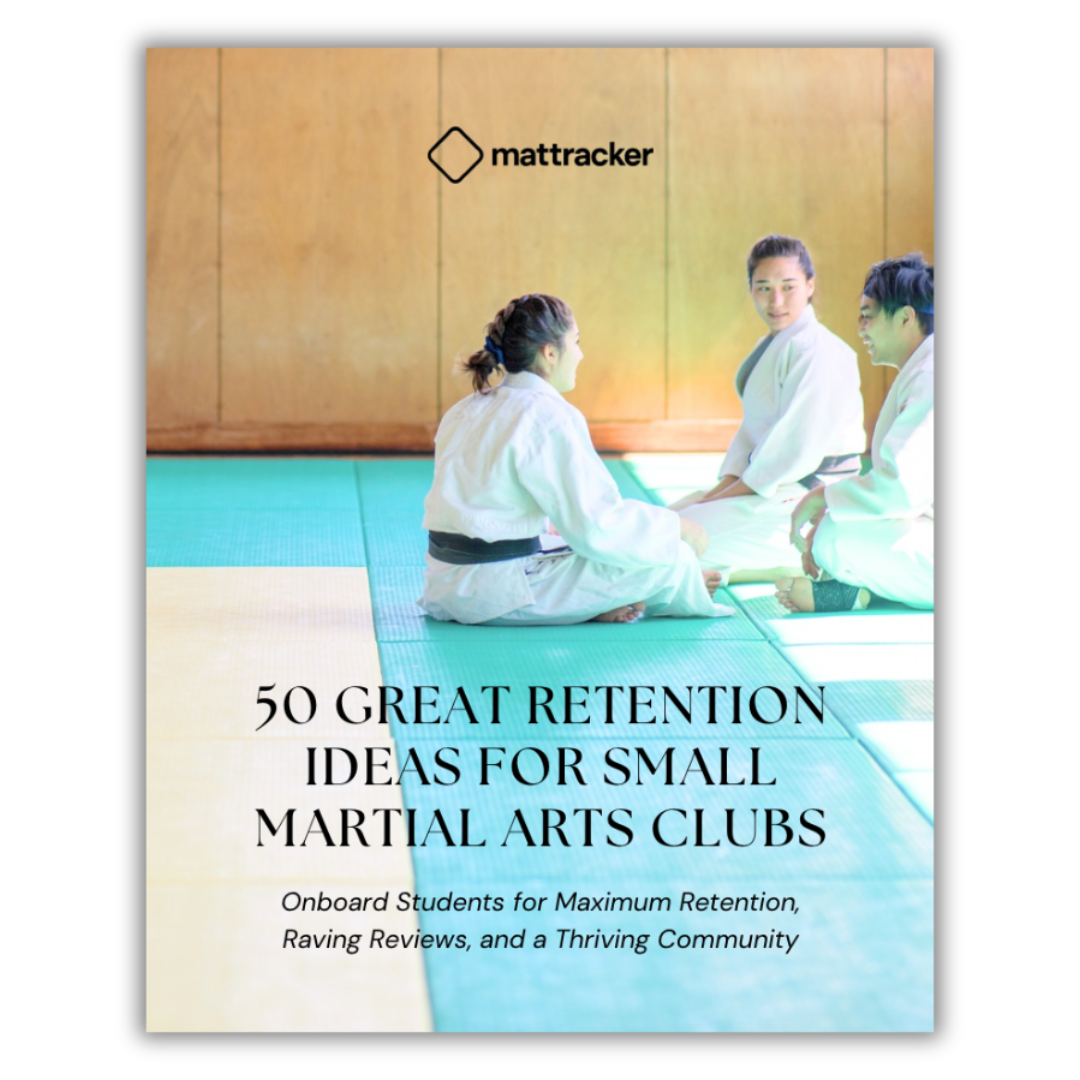
Get our Simplified Student Management System: A 5-Day Email Course plus a free bonus ebook with 50 retention ideas. Learn a low-tech, low-stress system to track student progress and boost retention.